Quick Answer
Collecting royalties from YouTube, TikTok, and Instagram usually requires more than uploading a song. Artists may need proper distribution, publishing administration, performance-rights registration, accurate metadata, and rights-management tools where eligible. Because platform and territory rules differ, artists should verify current requirements for each revenue source.
Key Takeaways
- Social music royalties can involve master, publishing, performance, and platform-specific income.
- Accurate metadata helps platforms and royalty organizations match usage correctly.
- Distribution alone may not collect every publishing or performance royalty.
- International collection rules vary, so artists should verify each platform and territory.
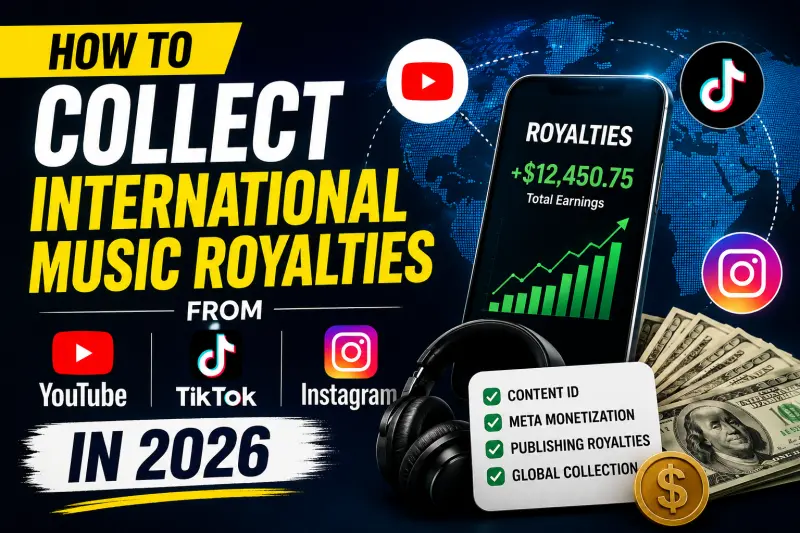
How to Collect International Music Royalties from YouTube, TikTok and Instagram in 2026
Your song may already be earning money on YouTube, TikTok and Instagram — but the real question is: are you collecting all of it?
In 2026, independent artists are not only earning from Spotify and Apple Music. A big part of music discovery now happens through YouTube Shorts, TikTok videos, Instagram Reels, Stories and user-generated content. But many artists still miss royalties because they only upload the song to a distributor and think the work is done.
It is not.
To collect international music royalties properly, you need to understand one simple thing: social media royalties are split across different rights. Your distributor may collect one side of the money, while a PRO, publisher or publishing administrator may collect another side.
The Simple Truth: One Song Can Earn from Multiple Royalty Streams
When your music is used on YouTube, TikTok or Instagram, the money does not always come from one place.
A single track can generate:
- Master recording royalties — paid to the owner of the recording.
- Publishing royalties — paid to songwriters, composers and publishers.
- UGC / Content ID revenue — paid when other people use your song in videos.
- Micro-sync royalties — generated when music is paired with video content online.
- Neighboring rights — in some cases, paid to performers and master owners through neighboring rights organizations.
This is why many artists feel confused. They see their song used in thousands of videos, but the earnings look small or missing. Usually, the issue is not only the platform — it is the collection setup.
YouTube Royalties: What You Need to Collect
YouTube is one of the most important royalty sources for independent artists because it has multiple music income layers.
You can earn from:
- Your official music video
- YouTube Music streams
- Art Tracks
- YouTube Shorts
- Fan uploads using your song
- Content ID claims on user-generated videos
- Publishing royalties from videos using your composition
YouTube’s Content ID system helps music partners identify and manage music on the platform. When a user-uploaded video matches a submitted asset, the rightsholder can choose whether to monetize, block or track that video. YouTube supports different music asset types, including Sound Recording assets, Composition Share assets, Music Video assets and Art Track assets.
This matters because your sound recording and your composition are not the same thing. If only the master side is registered, you may miss publishing royalties. If only the publishing side is registered, you may miss master-side UGC revenue.
How to Collect YouTube Royalties in 2026
To collect YouTube royalties properly, you need this setup:
1. Deliver your song to YouTube Music
Your distributor should deliver your release to YouTube Music and create an Art Track. An Art Track is usually the auto-generated YouTube version of your song with cover artwork and audio.
2. Enable YouTube Content ID
Content ID is what allows your music to be detected when other creators use it in videos. Without this, you may only earn from your own uploads and YouTube Music streams — not from thousands of fan videos, Shorts or reused audio.
3. Register your publishing
YouTube videos can generate publishing royalties too. Songtrust explains that monetized YouTube videos can generate both performance and mechanical royalties, often described as micro-sync royalties because the music is paired with moving images. These publishing royalties are usually handled through PROs, CMOs and mechanical collection organizations.
4. Keep your metadata clean
YouTube says missing or wrong music information can happen when it does not have enough data from the copyright owner, or when the music has not been identified yet. It also recommends checking identifiers like ISRC, ISWC, UPC and ISNI through your label, distributor, publisher or collection society.
Your YouTube collection checklist:
- ISRC added correctly
- UPC added correctly
- Songwriter names correct
- Publisher information correct
- Artist name consistent everywhere
- YouTube Content ID enabled
- Publishing registered separately
- No duplicate delivery from multiple companies
TikTok Royalties: Audio Library vs UGC
TikTok royalties are different from normal streaming royalties.
On TikTok, your song can earn when users select it from the official TikTok / ByteDance audio library. But there is another layer: user-generated content, where someone uploads a video that already contains your music in the audio.
DistroKid’s TikTok help page explains this difference clearly: music delivered to TikTok through the upload form is monetized through the TikTok audio library, but UGC monetization may require an extra rights-identification step. It also says that simply delivering to the TikTok audio library does not automatically allow all UGC content to be monetized on the artist’s behalf.
That means your song being “available on TikTok” and your song being “fully monetized on TikTok UGC” may not be the same thing.
How to Collect TikTok Royalties in 2026
To collect TikTok royalties properly:
1. Deliver your music to TikTok / ByteDance
When uploading your release through your distributor, make sure TikTok, TikTok Music if available in your region, CapCut and other ByteDance destinations are selected.
2. Check if UGC monetization is included
Some distributors include TikTok UGC monetization. Some charge extra. Some only deliver your song to the TikTok audio library but do not fully monetize videos where your music is already embedded in the upload.
Before choosing a distributor, check:
- Does it deliver to TikTok?
- Does it monetize TikTok UGC?
- Does it use TikTok’s music identification system?
- What percentage does it keep?
- Does it report TikTok earnings separately?
3. Use short hooks strategically
TikTok does not work like a normal streaming platform. A 15-second catchy hook can create more discovery than a full-length promotional post. If your song has a strong drop, punchline, hook or emotional line, create a short version around that moment.
4. Register the publishing side
TikTok usage can also involve publishing-related royalties depending on territory, agreements and rights setup. Do not rely only on the distributor if you are also the songwriter. Register the composition with your PRO, CMO or publishing administrator.
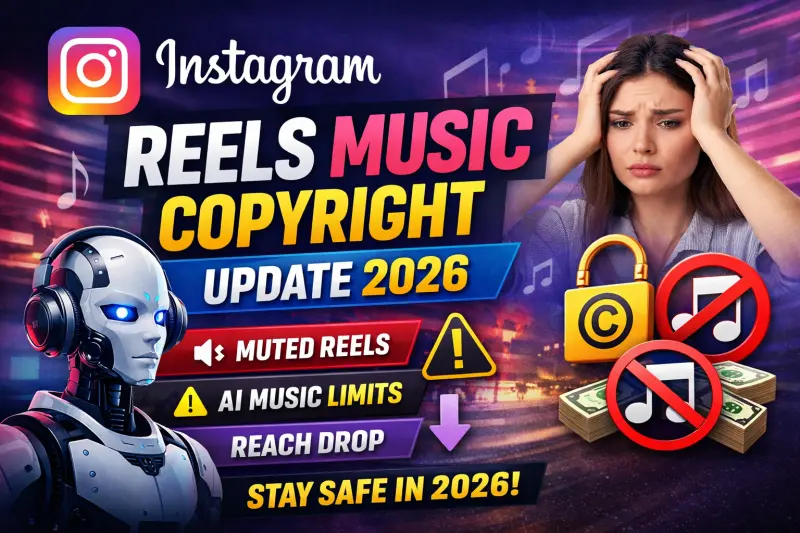
Instagram and Facebook Royalties: Meta Rights Manager
Instagram music royalties usually flow through Meta’s systems, especially for Reels, Stories and user-generated videos.
Meta uses Rights Manager to help rights holders manage audio, video and image matching across its platforms. Meta describes Rights Manager as a matching tool developed for rights holders to manage and protect their content.
Distributors can deliver eligible tracks into Meta’s rights management system. CD Baby says that when eligible music is opted into Facebook and Instagram monetization, the music is delivered to Meta’s rights management system, and when it is used in a video, Reel or Story, revenue can be collected on the artist’s behalf. CD Baby also notes that Meta monetization is triggered by video creation, not directly by views.
This is very important. On Instagram, a Reel with more views does not always mean royalties are calculated like YouTube views. Meta reporting can be based on usage events, distributor rules and territory-level reporting.
How to Collect Instagram Reels Royalties in 2026
To collect Instagram and Facebook royalties:
1. Deliver your track to Facebook / Instagram / Meta
Your distributor should offer Facebook and Instagram monetization or Meta Rights Manager delivery.
2. Use only one distributor for Meta rights
CD Baby states that a track cannot be delivered to Meta’s rights management system by more than one distributor at the same time.
This is where many independent artists make mistakes. They upload the same song through multiple distributors, then rights conflict starts. Result: delayed earnings, blocked monetization or missing reports.
3. Avoid covers for Meta monetization
CD Baby’s Meta monetization policy states that only original songs are eligible for Facebook and Instagram monetization through its system, while cover songs and public domain compositions are not delivered or monetized on Meta platforms.
Even if another distributor has slightly different rules, the safe approach is simple: for Meta monetization, original music is much easier and cleaner.
4. Check distributor commission
Some distributors take a cut from Meta UGC monetization. For example, DistroKid says Meta Rights Manager monetization is part of its Social Media Pack and that detected revenue is delivered to DistroKid, with revenue minus 20% going to the artist.
So before enabling social monetization, always check the fee.
The Biggest Mistake Artists Make
The biggest mistake is thinking:
“My song is on YouTube, TikTok and Instagram, so all royalties are collected.”
Not true.
Distribution and royalty collection are connected, but they are not the same thing.
A distributor usually helps collect master-side income from platforms. But publishing royalties may need a PRO, CMO, publisher or publishing administrator. ASCAP says foreign performance royalties are collected through agreements with foreign societies and then distributed to members.
So if your song is being used internationally, you need a global collection setup — not just a basic upload.
Best Setup for Independent Artists in 2026
For most independent artists, this is the clean setup:
Master Recording Side
Use a distributor that supports:
- YouTube Music
- YouTube Content ID
- TikTok / ByteDance
- TikTok UGC monetization
- Facebook / Instagram monetization
- Meta Rights Manager
- Clean royalty reporting
- No unnecessary rights conflicts
Publishing Side
Register your songs with:
- A PRO or CMO
- A publishing administrator if you want global collection
- Mechanical royalty collection where applicable
- Correct songwriter splits
- Correct ISWC and IPI information
Neighboring Rights Side
If your music is getting international radio, non-interactive streaming or public performance usage, also check neighboring rights collection. SoundExchange describes itself as a global neighboring rights organization that collects and distributes digital performance royalties and international performance royalties through a global partnership network.
This may not replace your distributor or publishing administrator, but it can help with another royalty layer.
Royalty Collection Checklist for 2026
Before releasing your next song, check this:
- Song is 100% original or properly licensed
- ISRC is correct
- UPC is correct
- Artist name is consistent
- Songwriter names are correct
- Producer splits are clear
- Distributor delivers to YouTube Music
- YouTube Content ID is enabled
- TikTok / ByteDance delivery is enabled
- TikTok UGC monetization is enabled if available
- Facebook / Instagram / Meta monetization is enabled
- Meta rights are not delivered by multiple distributors
- Song is registered with PRO / CMO
- Publishing administrator is set up for global collection
- Tax and payment details are completed
- Royalty reports are checked every month or quarter
How Long Do These Royalties Take to Arrive?
Do not expect instant payment.
YouTube, TikTok and Meta royalties often take time because platforms report earnings to distributors first, then distributors process them into your account. Meta earnings can be especially delayed because some distributors report them quarterly. CD Baby says Facebook and Instagram earnings are reported quarterly, 45 days after the end of each quarter.
So if your song goes viral today, the money may not show up immediately. The better approach is to track usage, wait for reporting cycles and keep metadata clean.
Final Verdict
In 2026, international music royalties from YouTube, TikTok and Instagram are not collected from one single button.
You need three layers:
- Distributor — for master-side platform royalties
- Content ID / Rights Manager / UGC monetization — for social video usage
- Publishing collection — for songwriter and composition royalties
If you only upload your song and ignore the rest, you may leave money behind. But if your metadata, distributor settings, Content ID, TikTok UGC, Meta Rights Manager and publishing collection are properly set up, your song can earn from official streams, Shorts, Reels, TikToks, fan videos and international usage.
For independent artists, this is no longer optional. Social media is not just promotion anymore — it is part of your royalty system.
FAQ
Do artists earn royalties from TikTok videos?
Yes, artists can earn when their music is used through TikTok’s official audio library. Some distributors also offer additional TikTok UGC monetization for videos where the music is already embedded in the uploaded video.
Do Instagram Reels pay music royalties?
Yes, Instagram Reels can generate music-related revenue when your music is delivered into Meta’s monetization or rights management system through an eligible distributor.
Is YouTube Content ID necessary?
Yes, if you want to earn from other people using your music in videos. Without Content ID, you may miss UGC revenue from fan uploads, Shorts and reused audio.
Does my distributor collect all royalties?
Usually no. Your distributor may collect master-side royalties, but publishing royalties often require a PRO, CMO or publishing administrator.
Can I use multiple distributors for the same song?
Avoid it, especially for YouTube Content ID and Meta Rights Manager. Duplicate delivery can create ownership conflicts, delayed payments and blocked monetization.
Do cover songs earn from Instagram and TikTok?
It depends on the platform, distributor and license setup. For Meta monetization, some distributors only accept original songs, so covers can be restricted.
What is the best way to collect international royalties?
Use a distributor for master royalties, enable YouTube Content ID and social UGC monetization, register your songs with a PRO or CMO, and use publishing administration for global collection.
Release Your Music Globally With Last Play Distro
With Last Play Distro, artists can distribute music globally to 150+ platforms, start on a Free tier where they keep 60% royalties, or upgrade to Premium tiers where they can keep up to 95% royalties.
- Global music distribution for independent artists
- Transparent royalties with plan-based royalty splits
- No fake partner, review, rating, or inflated artist-count claims